
July 15, 2024
Double-sided TIG welding process
What is double-sided TIG?
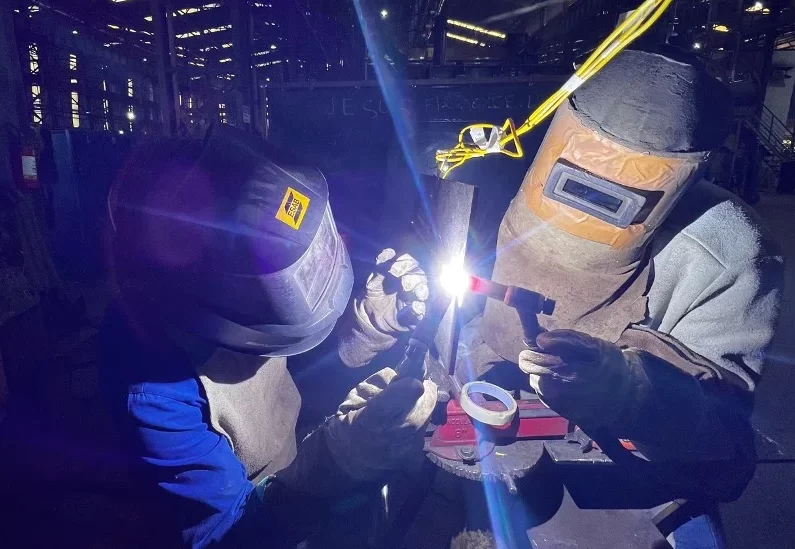
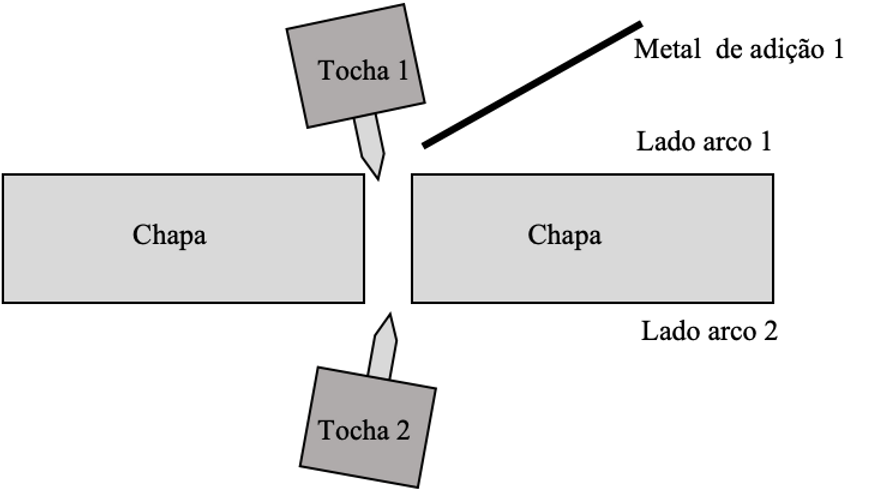
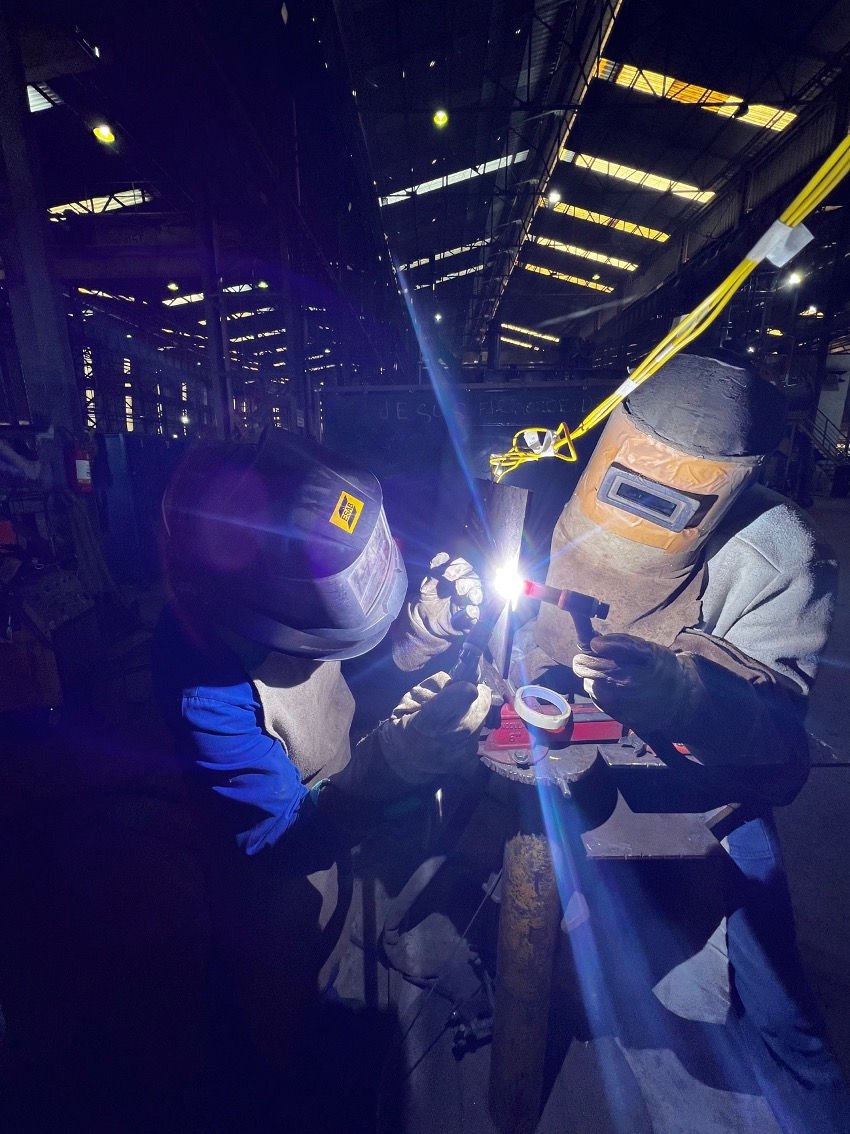
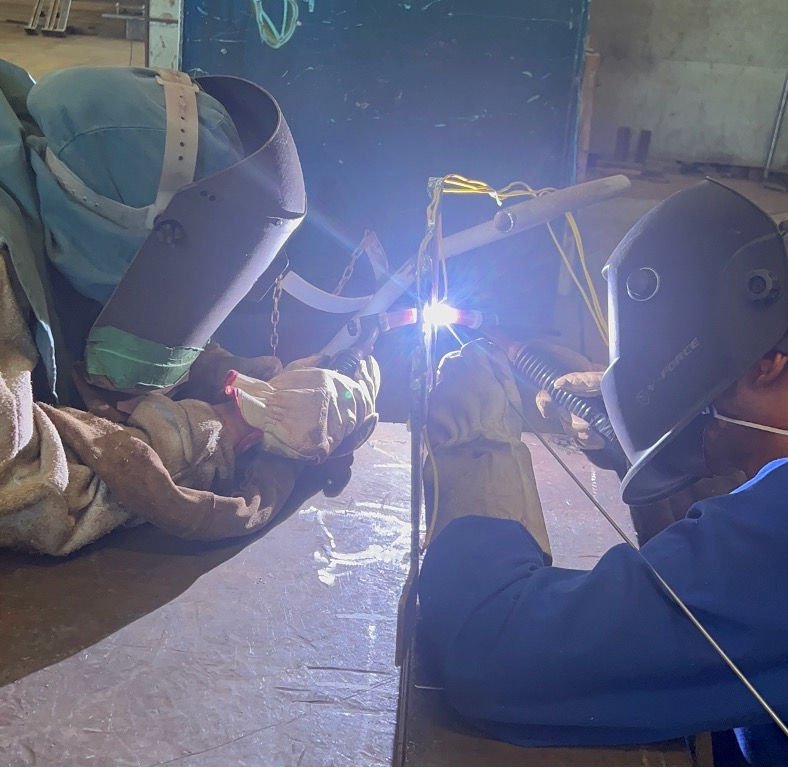
The double-sided TIG welding process, or GTAW-DF, is a variation of the TIG (GTAW) process in which welding is performed by combining two arcs on a single weld pool, one on one side of the plate (arc 1) and the second struck on the opposite side (arc 2). This is why the welding professionals who pioneered it used the term “dupla fusão” (double fusion), and why it is known elsewhere as synchronised TIG welding. The process is illustrated below:
Characteristics of each arc
Arc 1:
- Welding starts with the ignition of this arc on one side of the joint;
- This arc welds with filler metal (heterogeneous);
- Its purpose is to weld as in the conventional process (GTAW), forming the weld pool by melting the base metal and the filler metal, and to produce the cap on that side of the plate.
Arc 2:
- After arc 1 is struck, this arc is opened onto the same weld pool from the opposite side;
- This arc welds without filler metal (autogenous), also referred to as fusion pass;
- Its purpose is to fuse the weld pool from the opposite side, which has the effect of pulling the pool towards the torch of arc 2, significantly increasing joint penetration;
- When welding stainless steels, this second arc also protects the weld pool against oxidation, acting as a purge.
Comparison with conventional TIG
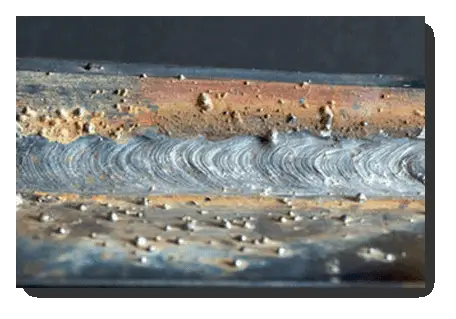
Comparing conventional GTAW with GTAW-DF on a 6 mm thick joint, GTAW requires a V or X groove with a 3.2 mm root opening to give the filler metal access, and needs at least 3 passes to complete the joint. The GTAW-DF process needs no groove at this thickness, only a 3.2 mm root opening, and the joint is welded in a single pass, as shown below:
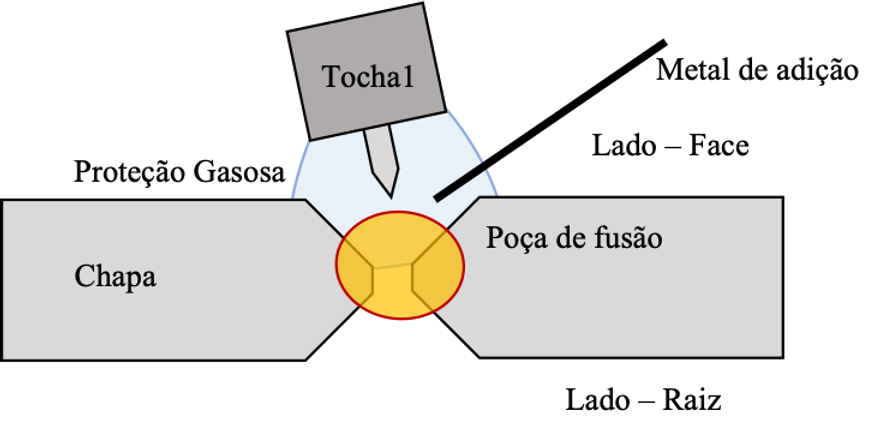
Schematic of the GTAW process on a 6 mm joint with an X groove.
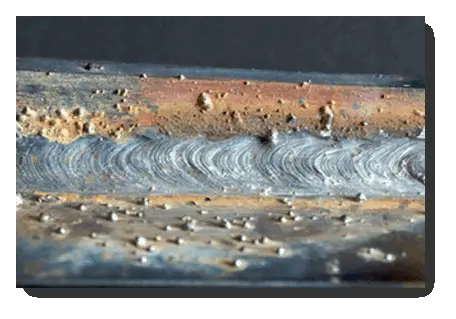
Pass sequence of the GTAW process on a 6 mm joint with an X groove.
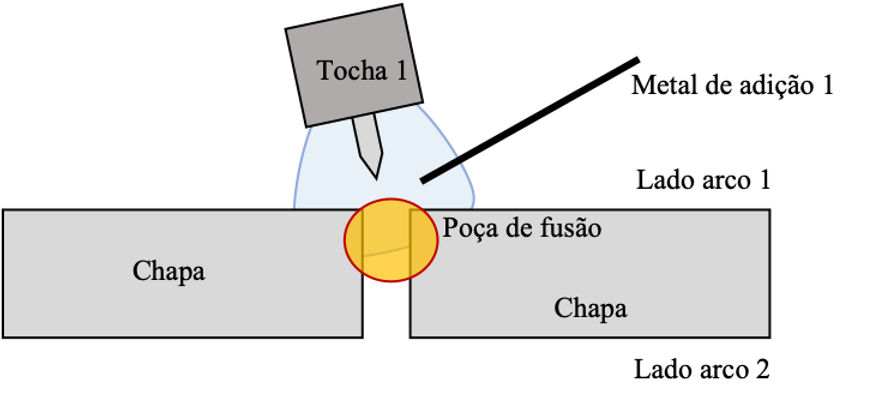
Schematic of the GTAW-DF process at the moment the first arc is struck on a 6 mm thick plate, with no groove.
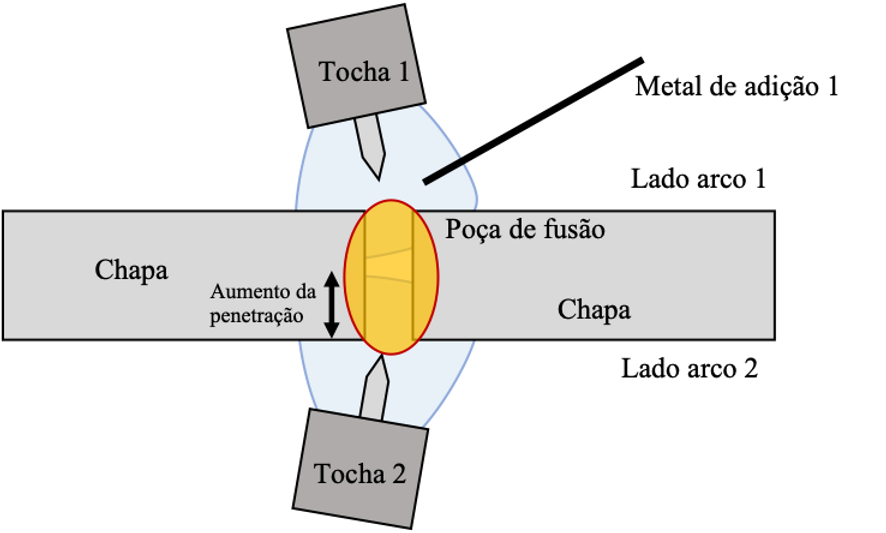
Schematic of the GTAW-DF process at the moment the second arc is struck on a 6 mm thick plate, with no groove.
In the last figure you can see the effect of striking the second arc, pulling the weld pool towards torch 2 and significantly increasing the penetration of the process.

Pass sequence of the GTAW-DF process on a 6 mm joint.
The welding equipment is the same as for conventional GTAW (TIG), but two welding machines and two welders working together are required. Read more about the conventional GTAW process in this article.
Applications
This variation of the process is only applicable to root passes and where there is access from both sides. Its great advantage over the conventional process is that GTAW-DF allows much higher travel speeds on root passes, raising productivity, removing the need for back gouging and purging, and reducing rework on welds that require volumetric testing.
- Only feasible on joints with access from both sides, that is, flat plate or circular sections over 500 mm in diameter;
- Requires 2 welders working simultaneously;
- Travel speed twice that of conventional GTAW;
- Does not require heavy groove cleaning;
- Does not require tack welds to be removed from the groove, as they are completely remelted;
- Plate up to 6 mm needs only one pass to complete the joint;
- Eliminates the need for back gouging or root-side cleaning;
- Very low incidence of welding defects.