
September 15, 2025
Welder requalification - how is it done?
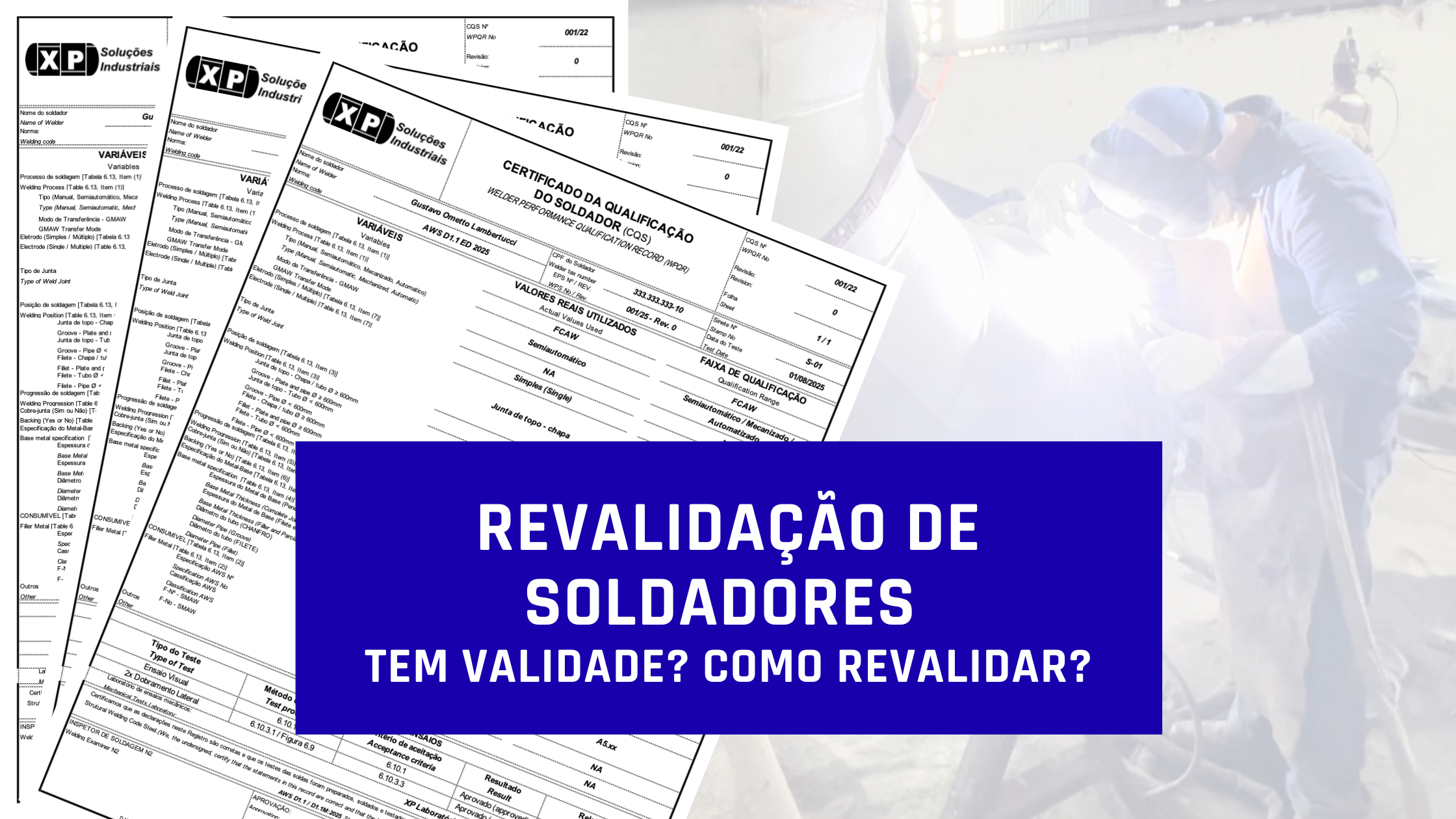
In the world of welded equipment fabrication, we all know procedures (WPSs), welders and inspectors have to be qualified. What is easy to overlook is that welder qualifications have an expiry date. Depending on the applicable codes and the client’s contract documents, welders have to be revalidated periodically.
How long is a qualification valid?
AWS D1.1 and ASME IX specify that a welder’s qualification remains valid as long as the welder is not inactive in that welding process for a period longer than 6 months. If that happens, the company must arrange revalidation.
ISO 9606 also uses a 6-month period for maintaining validity, but imposes additional rules on the company’s controls.
It is essential to review the client’s contract documents. I have worked on projects with additional requirements calling for revalidation every 3 months and accepting only volumetric testing evidence (UT / RT).
How is a welder’s qualification revalidated?
To revalidate, the company has to demonstrate that the welder remained active in the qualified process within the validity period. On that evidence, the Level 2 Welding Inspector issues a document revalidating the qualification for a further 6 months. The cycle must be repeated before it expires again.
For AWS D1.1 and ASME IX there is no limit on the number of revalidations. Under ISO 9606, the company must meet additional requirements for the welder to be qualified indefinitely, such as revalidating by volumetric testing (UT / RT) every 2 years or requalifying completely every 3 years.
It is worth repeating that the contract documents have to be checked: more demanding clients may ask for revalidation evidence by surface testing (MT / PT) and, in other cases, by volumetric testing (UT / RT). That is exactly why you want competent people reviewing the client’s requirements.
What if the qualification has already expired?
- Under ASME IX: the welder must weld a test coupon (any material, thickness, diameter or position, on pipe or plate), which is then subjected to the qualification tests (visual examination plus bend tests, or volumetric testing). Once accepted, all of that welder’s qualifications in that process are revalidated.
- Under AWS D1.1: the welder must be requalified from scratch. The code has specific rules for this case; for example, if the welder qualifies on a 10 mm thick joint, the new qualification covers production welds from 3 mm upwards.
- Under ISO 9606: the welder must be requalified from scratch.
Management is the key to success
Managing these qualifications is a critical organisational function. It is the company that must document each welder’s activity and ensure continuous compliance. A good control system avoids the cost of emergency requalifications, production stoppages and, most importantly, contractual non-conformities.
Don’t let your team’s qualifications lapse - work with XP Soluções Industriais
Managing the code nuances and the deadlines for each welder can be a complex challenge. XP Soluções Industriais is here to simplify that process for your company. With broad experience in the sector, we offer a complete service for managing and revalidating welder qualifications:
- Specialist consulting: we advise your company on best practice for maintaining and revalidating qualifications under the applicable codes.
- Qualification management: we help you implement an efficient system to monitor certificate validity, avoiding surprises and stoppages.
- Testing and acceptance: we run and accept the revalidation tests, issuing all the documentation needed to keep your team fully compliant.
Do not put your company’s compliance and your project quality at risk. Make sure your welders are always qualified and ready for what industry demands.
Get in touch with XP Soluções Industriais today and secure excellence and safety in your welding operations.
Any questions, or need a quote? Get in touch now.