
May 16, 2025
What is boilermaking? Understanding how this industry works
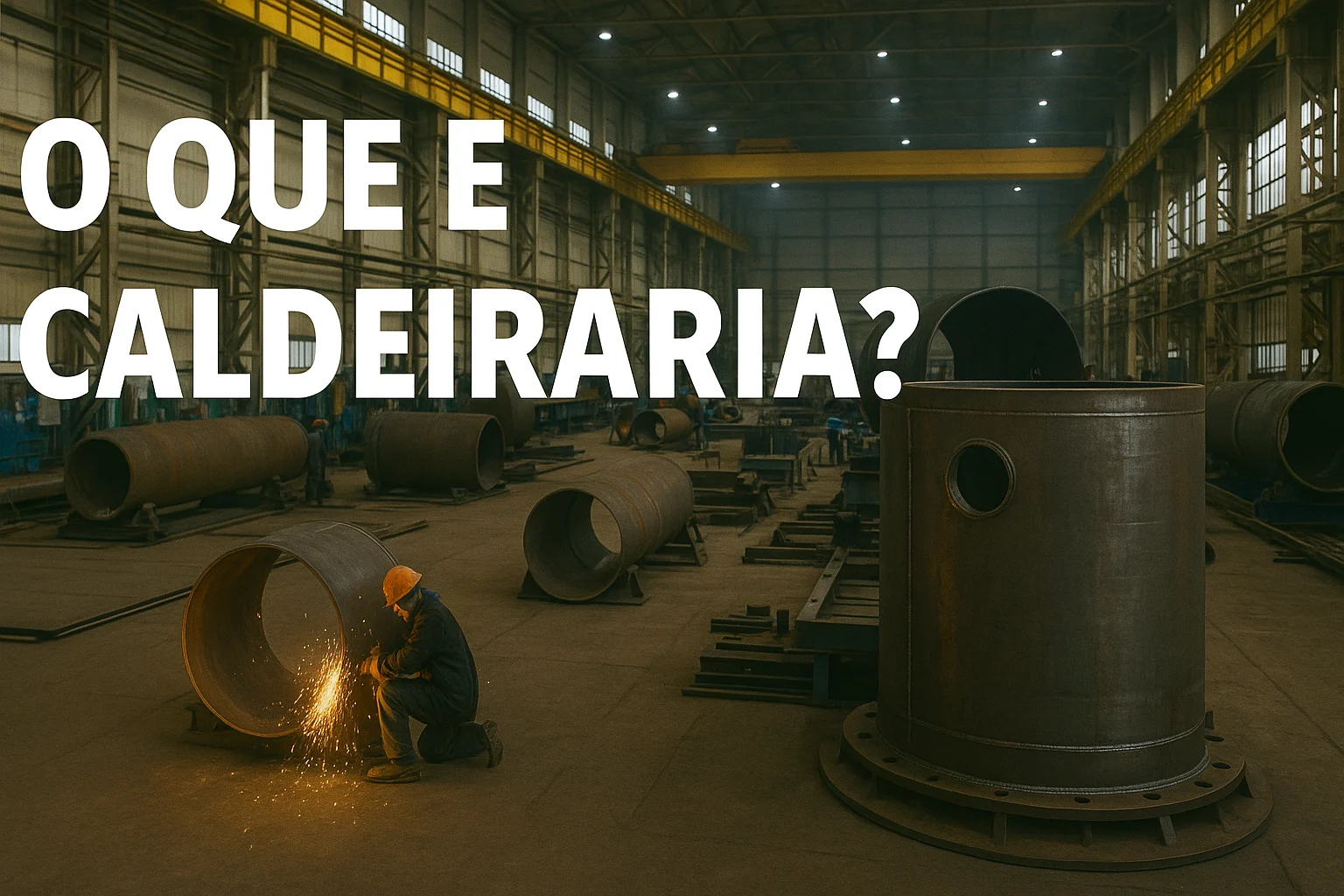
When people hear “boilermaking” (in Portuguese, caldeiraria), many still associate the term only with making thermal boilers. That is partly correct, but the truth is that boilermaking goes far beyond it. It is the branch of industrial fabrication dedicated to transforming plate, pipe, beams and other metallic materials into welded structures and equipment - often very large - through cutting, forming, machining, fit-up, welding and painting.
Before getting into the technical detail of this industry, though, it is essential to understand one key characteristic of industrial boilermaking: made-to-order production.
Boilermaking is made to order, not series production
The vast majority of fabrication shops in Brazil and worldwide work with custom products, built to a design and made to measure for each client. Unlike the automotive industry, for example, where thousands of identical parts come off an assembly line, boilermaking deals with unique equipment or work with extremely low repeatability.
Every project is a new project. That means that with each order you have to review drawings, plan the fabrication route, adapt processes and, often, reassess tooling or develop specific fixtures. This degree of customisation demands a qualified workforce, engineering on hand, and strong integration between design, production planning and control, fabrication, quality control and inspection.
There are of course exceptions. Some companies specialise in serial parts within the boilermaking world - standardised tanks or modular components for plants - but they are a minority. The rule is made-to-order work.
Stages of boilermaking production
Let us now look at the main stages of the fabrication process:
1. Receiving the design and planning
Everything starts with receiving the technical design (drawings, specifications and applicable codes). Engineering assesses product feasibility and defines the fabrication routes, the processes, the materials and the equipment needed. This is where estimated times, sequence of operations and critical control points are determined.
2. Cutting
Steel plate (usually carbon steel, stainless steel or special alloys) goes through cutting processes that may include:
- Thermal cutting (plasma, oxy-fuel, laser)
- Guillotine shearing
- Sawing for profiles and bars
Cut quality is essential, since it directly influences how the parts fit together and whether the equipment meets its dimensional tolerances.
3. Forming
Once cut, many parts have to be bent, rolled (forming flat plate into a circular section) or pressed into the required shape. The machines involved include:
- Press brakes
- Plate rolls
- Hydraulic presses
Forming is a critical stage for turning flat parts into cylinders, cones, transitions and curved structures.
4. Machining (where required)
For parts demanding dimensional precision or a specific finish, machining comes in. That can include:
- Facing flanges
- Drilling connections
- Turning or milling components
Not every fabrication shop has machining in house, but it is common to keep partnerships with specialist companies or to subcontract the service.
5. Fit-up and welding
At this stage the cut and formed parts are assembled on fixtures, jigs or assembly benches. Welding is carried out using qualified processes such as:
- GMAW (MIG/MAG)
- FCAW (flux-cored wire)
- SMAW (stick)
- GTAW (TIG)
- SAW (submerged arc)
Joints are inspected against technical criteria (visual, dye penetrant, ultrasonic, radiographic, among others).
6. Heat treatment and painting
In some cases stress relief or other heat treatments are carried out after welding. There may also be blasting and painting to the specified system (epoxy, polyurethane, zinc, and so on).
7. Final assembly, testing and packing
The equipment is assembled, tested where applicable - hydrostatic, leak or dimensional testing - and packed for transport.
Types of equipment made in a fabrication shop
Many types of equipment can be manufactured by the boilermaking industry, including:
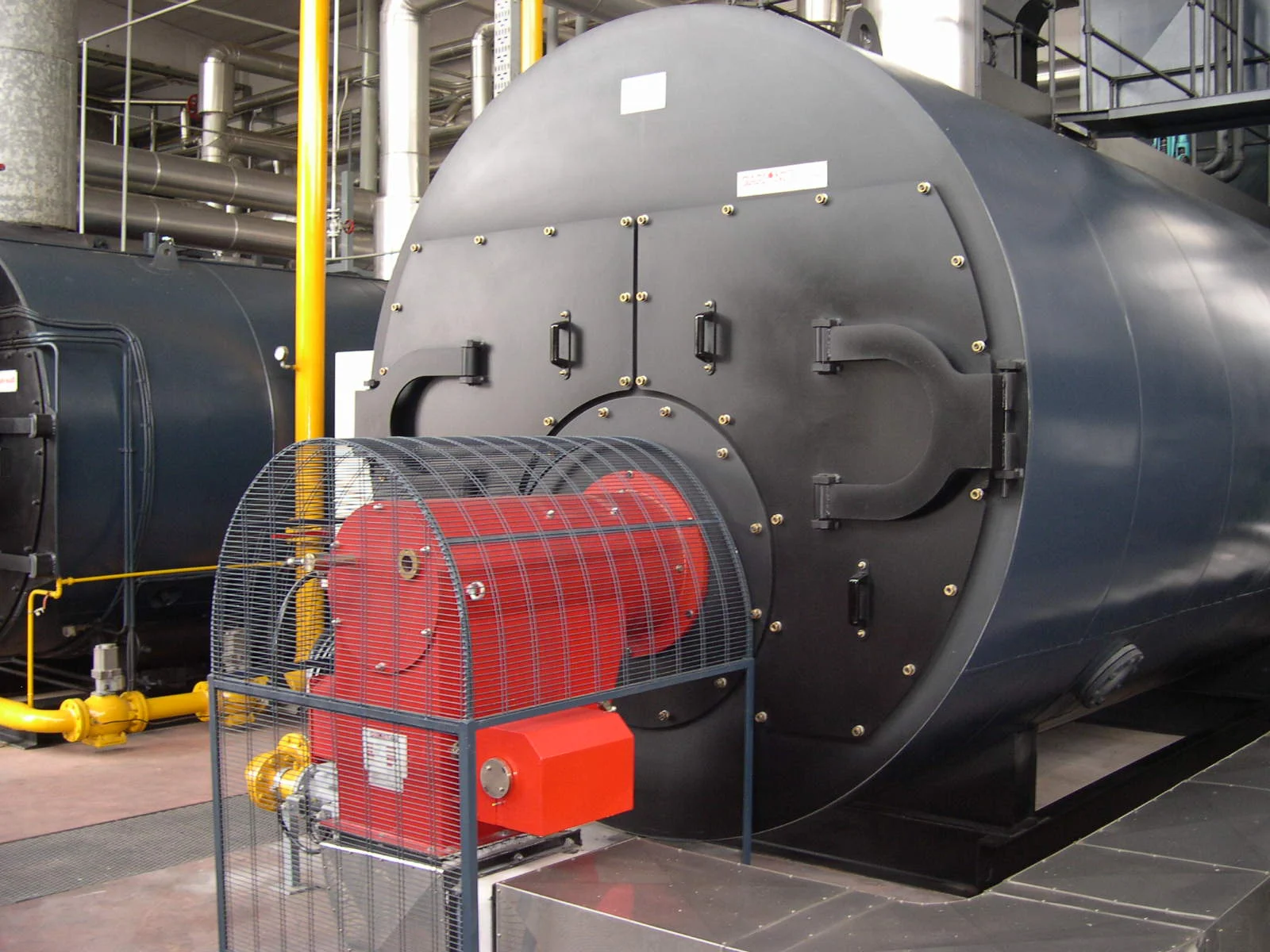
Boilers
Equipment intended to generate steam or heat water or other fluids, by burning a fuel or using electrical energy. They are widely used in industrial processes and heating systems.
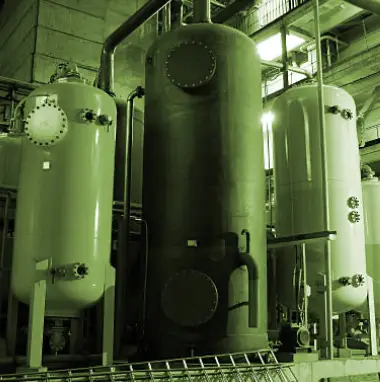
Pressure vessels
Equipment designed to contain fluids (liquid or gas) at pressures significantly different from ambient. They appear in many applications, such as reactors, heat exchangers and accumulators.
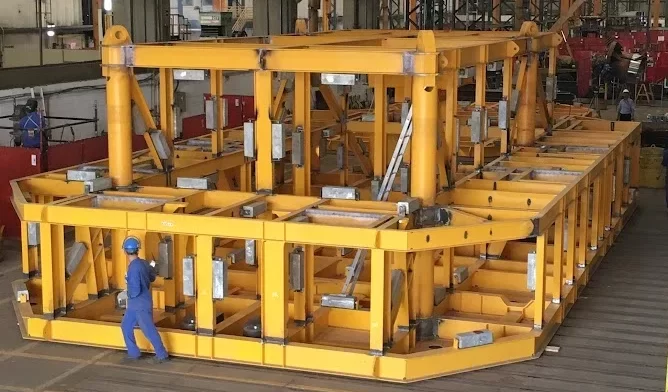
Steel structures
Systems fabricated from welded steel sections to support or protect buildings, bridges, warehouses, equipment and other constructions, and to assist transport.
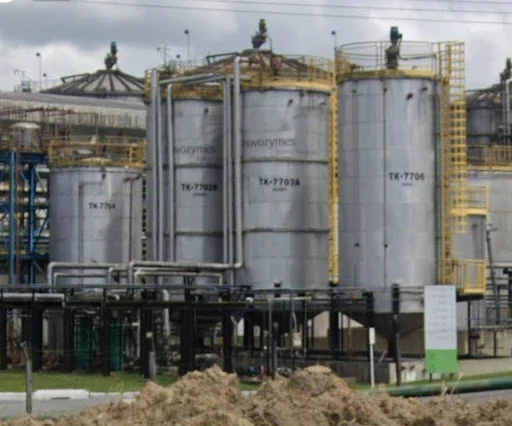
Storage tanks
Vessels used to store a wide variety of liquid or gaseous products, such as fuels, water, chemicals and grain. They may be atmospheric or pressurised.
Conclusion
Boilermaking is a highly technical manufacturing industry, and in places still a craft. Its greatest peculiarity is precisely that it works with made-to-order products, demanding constant adaptation, versatility and technical knowledge.
If you work in the field, you know every project is a new challenge. And if you are discovering this world now, know that boilermaking is engineering genuinely applied in practice - with plenty of sweat, precision and responsibility.