
May 16, 2025
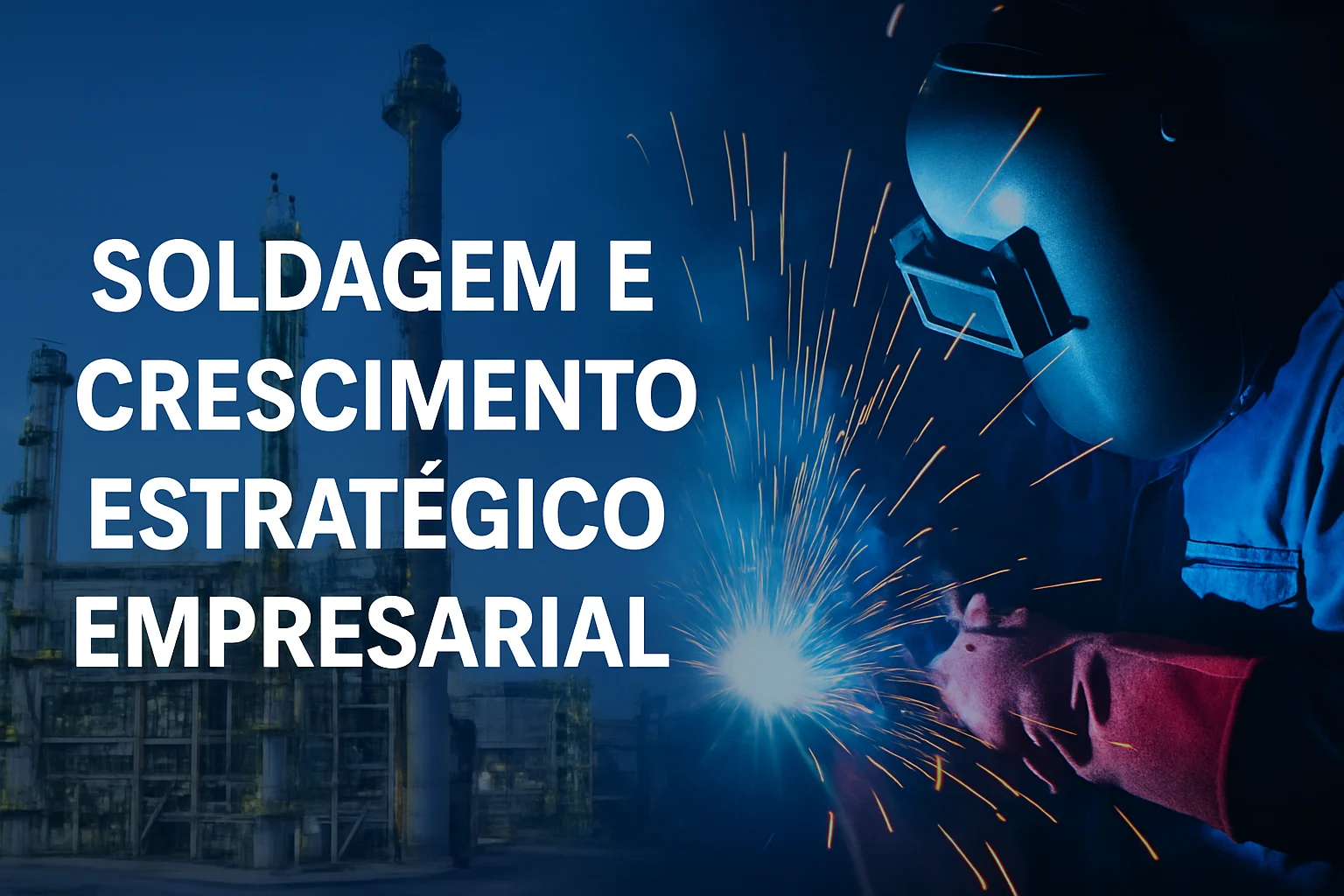
Welding and strategic business growth: how technical structure and code compliance drive high-value industrial business
Introduction
Welding is often treated reactively in industry - as just another link in the production chain. Companies that understand welding as a critical, code-governed process, structured strategically, reap significant results: access to new markets, technical standing with major buyers and revenue growth from higher value-added services.
In this article I set out, technically and strategically, how a complete build-out of welding engineering - documentation, qualification, traceability, process control and code compliance - can turn small and medium companies into suppliers able to compete for substantial projects and high-volume contracts.
Drawing on more than 15 years in oil and gas, power, chemicals and heavy fabrication, I explain what it actually takes to make that shift, and how specialist technical consulting can make the leap safe, solid and auditable.
1. The technical reality of the market: why do companies with physical capacity lose big contracts?
It is common to find companies with an excellent shop floor, skilled people and real production know-how that remain confined to lower-value, low-margin contracts. The reason is almost always the absence of a documented technical record validated against international codes - something major buyers treat as a pass/fail criterion.
The requirements normally demanded include:
- Qualified WPSs (ASME IX, AWS D1.1, ISO 15614-1, DNVGL-RP, Petrobras N-133/N-2301), with a qualified PQR and all mechanical test records and certificates preserved;
- A list of welders qualified by process and position, with traceable validity and documented performance;
- Consumable control, with a receiving plan, visual and dimensional inspection, storage records per the manufacturer’s requirements, segregation by batch, and traceability of consumables to each piece of equipment;
- Welding plans and ITPs specific to each item of equipment, by joint type, thickness, material and applicable code;
- Traceability of materials and consumables, documented through to the final product;
- A complete technical databook, meeting the audits of clients such as Petrobras and other major players;
- Company certifications, such as ISO 9001, ASME U or R Stamp and ISO 3834.
The absence of those technical elements disqualifies companies, even ones that are technically capable in practice. In other words: it is not enough to weld well - you have to prove technically that you weld well, with traceability, control and compliance. I often say that any company is capable of fabricating a piece of equipment; many, however, cannot demonstrate the robustness of process and quality control needed to produce the documentation that makes up the databook - the collection of information and fabrication history that proves and guarantees quality and traceability. Without it, welded equipment cannot be installed in refineries and industrial plants.
2. Structured welding engineering: a technical and commercial lever
Building welding engineering around code compliance and strategy is not a cost - it is an investment with measurable return. Correct application of the codes and formalisation of operational controls turn the company into a technical asset the market can trust.
Direct examples of impact:
- Higher average contract value, through entry into large EPC (Engineering, Procurement and Construction) projects and special applications;
- Less rework and fewer non-conformities, thanks to process standardisation and technical predictability;
- Approval on rigorous technical registers, and inclusion in the vendor lists of major clients;
- Access to tenders with specific technical requirements, which eliminate competitors without the structure.
A company with its own WPSs, qualified welders, consumable control and code-compliant documentation does not compete on price alone - it competes on technical value. And in many cases it is the only company able to execute the scope.
3. Fundamental technical elements - a high standard of quality
To win a contract with any major player, a company has to pass a demanding audit. Below are the minimum elements a company needs to compete in significant industrial projects, and that get audited:
3.1 Welding procedure qualification (WPS and PQR)
Writing and qualifying WPSs to ASME IX, AWS D1.1, ISO 15614-1 or the applicable code, including:
- Documentation produced by an experienced certified Level 2 Welding Inspector;
- Correct base metal classification (P-Number, Group Number);
- Appropriate consumable selection (F-Number, A-Number);
- Test records (tensile, bend, impact, hardness, macro, and so on);
- Qualified ranges calculated per the code.
3.2 Welder qualification and control
- Welders qualified for each process and position (SMAW, GMAW, GTAW, SAW, FCAW);
- Performance history and production traceability;
- Periodic revalidation every 6 months (3 months depending on the contract) and evaluation of repair rates;
- Integration of that control into the company’s technical database.
3.3 Technical instructions and welding plans (ITPs)
- Standardised descriptions by joint type, material and process;
- Visual detail (sketches, weld symbols, tolerances);
- Non-destructive testing procedures;
- Execution sequence, preheat, interpass and post-heat;
- Defined inspection points (visual, NDT, dimensional).
3.4 Technical traceability and the final databook
- Material control by batch number and certificate;
- Consumable identification by batch and manufacturer;
- Links between WPS, welder, joint and production record;
- Final assembly of the databook with all documents in technical and chronological order.
3.5 Consumable management and technical storage
- Documented procedures for inspection on receipt;
- Storage per the manufacturer’s specification;
- Usage records by identification code and date;
- Batch traceability by product and welded joint.
4. Consulting: technical know-how with immediate industrial application
XP Soluções Industriais provides consulting aimed at helping technically competent companies win larger projects and more demanding clients through applied technical excellence in welding and equipment fabrication.
With a solid technical background - Mechanical Engineer with a specialisation in Welding Engineering from USP, a completed master’s degree and a PhD in progress in Materials Engineering at UFSCar, plus certification as a Level 2 Welding Inspector by FBTS/SNQC - I have worked for more than 15 years in welding and quality at companies supplying the most demanding sectors of heavy industry.
Services offered:
- Complete implementation of the welding engineering structure (WPS, ITP, welding plan, databook);
- Qualification of procedures and welders to the applicable codes and standards;
- Preparation of all NDT and quality documentation and procedures;
- Critical review and restructuring of consumable control and traceability;
- Creation of integrated documentation templates compatible with client audits;
- Technical and commercial support for entering new markets and special projects;
- Practical training for shop floor, inspection and engineering teams;
- Preparation and support for audits by the most demanding clients in the market.
I work alongside the company, understanding its current structure and building a tailored solution focused on measurable technical results and concrete commercial gains.
5. Expected results
Revenue growth
Companies with this structure can win contracts with significantly higher added value, achieving a price-per-kilogram at least 50% above the market average. Once they start working with special materials, that premium starts at 100%.
Higher quality and productivity
With documentation, standardisation and process control in place, the consequence is less rework, higher output and fewer non-conformities.
Greater credibility and reputation
The company becomes a reference in the market, raising its credibility and authority, and starts receiving enquiries from many other potential clients.
6. Conclusion: technical maturity unlocks the commercial side
Technical maturity in welding is not a luxury - it is a prerequisite for growing safely and profitably in high-value industrial markets.
Companies that treat welding with documentary seriousness and code rigour are always ahead. They price better, negotiate from a technical record, scale production under control and present clear differentiators in technical audits and commercial approvals.
If you have the structure and the potential, all that is missing is the technical formalisation. That is exactly what our consulting delivers.
Shall we talk technically about your company? I can help you turn welding into a genuine business lever, with solid processes, traceability and impeccable technical documentation - all aimed at real, concrete and measurable commercial gain.
Get in touch now and book a technical meeting. Welding may be the differentiator your company needs to reach the next level.