
July 15, 2024
Stainless steels
What are stainless steels?
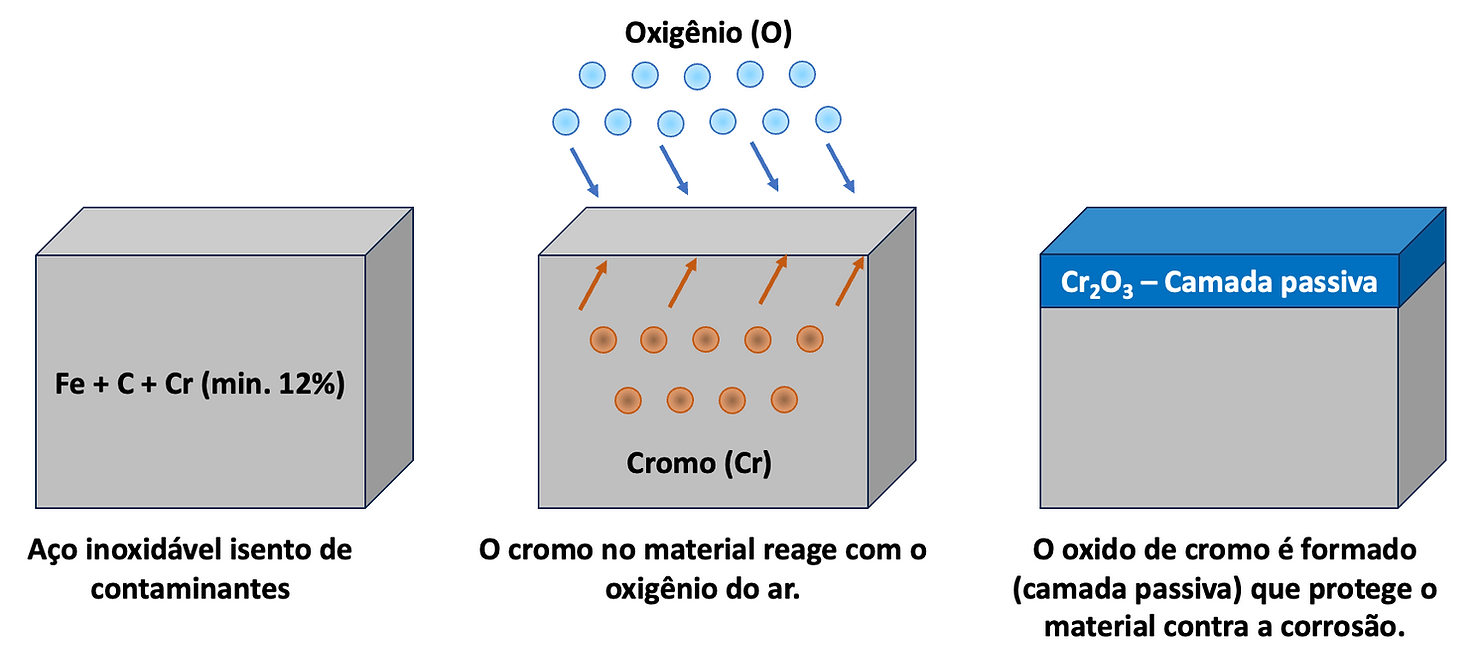
Stainless steels are iron-based (Fe) alloys containing at least 12% chromium (Cr). Their defining property is corrosion resistance in oxidising atmospheres, thanks to the formation of a thin film of chromium oxide (Cr2O3) known as the passive layer. That layer prevents direct contact between the metal substrate and the corrosive medium and slows the oxidation of iron, a phenomenon that is extremely damaging and undesirable in these materials.
In general these steels have low carbon content and may contain elements such as Ni, Mn, Mo, N and others to further improve corrosion resistance.
Types of stainless steel and their applications
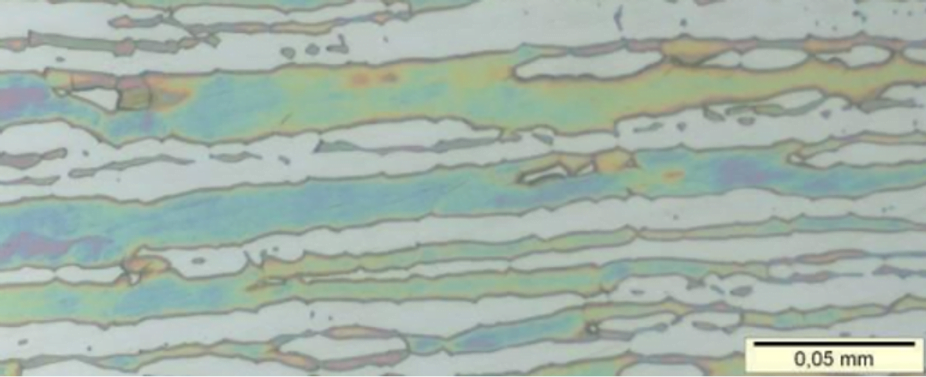
There are several types of stainless steel, classified by their microstructure: austenitic, martensitic, ferritic, precipitation hardening and duplex.
Austenitic stainless steels are the most widely used today because of their good weldability and corrosion resistance, and they are non-magnetic - unlike ferritic steels, which are magnetic.
Ferritic stainless steels have low carbon content, since carbon is an austenite stabiliser. Their predominant alloying elements are Cr and Mo, and they cannot be hardened by heat treatment.
Martensitic stainless steels generally require quenching to reach a martensitic microstructure and are used in applications demanding high mechanical strength, including at elevated temperatures.
Precipitation hardening stainless steels are steels given ageing heat treatments; they reach high mechanical strength and are widely used in fasteners, such as high-strength bolts.
Duplex stainless steels have a two-phase microstructure of austenite plus ferrite and combine high mechanical strength with high corrosion resistance, with wide application in oil and gas, pulp and paper, and chemical processing plants generally.
Chemical composition of stainless steels
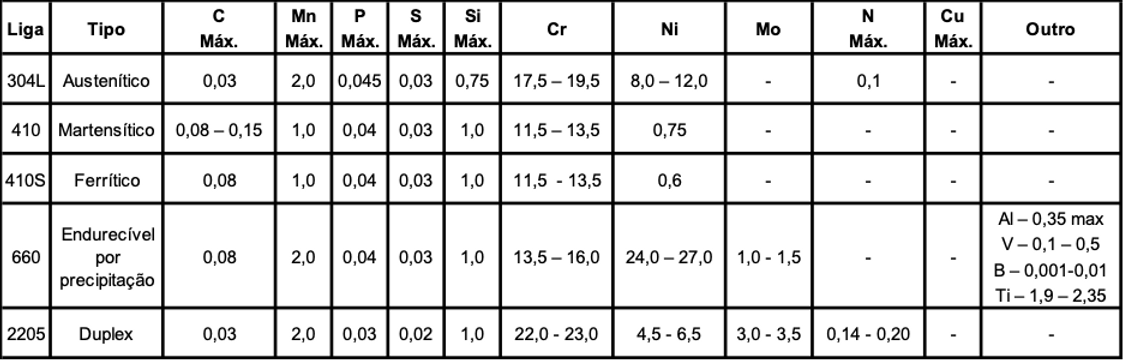
The table below shows the chemical compositions, per ASTM A240/240M and ASTM A638/638M, of typical alloys of each stainless steel type.
Mechanical properties of stainless steels
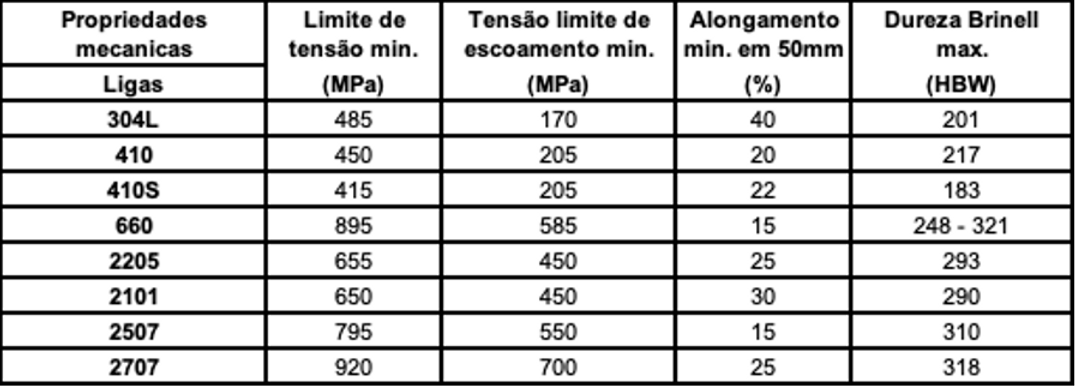
The table below gives the mechanical properties of some stainless steels commonly used in the market.
Corrosion resistance of stainless steels
To quantify pitting corrosion resistance, which is the main reason stainless steels are specified, the PREN (Pitting Resistance Equivalent Number) equation is used. The equation relates the chemical elements in the material and is given by equation (1), or equation (2) where W is added to the alloy:
| Equation | |
|---|---|
| PREN = (%Cr) + 3.3 x (%Mo) + 16 x (%N) | (1) |
| PREW = (%Cr) + 3.3 x (%Mo) + 1.65 x (%W) + 16 x (%N) | (2) |
As shown, Cr, Mo, W and N are the alloying elements chiefly responsible for the material’s pitting corrosion resistance.
The table below lists some common stainless steels and their respective PREN ranges: