July 15, 2024
Heat Affected Zone (HAZ)
What is the Heat Affected Zone (HAZ)?
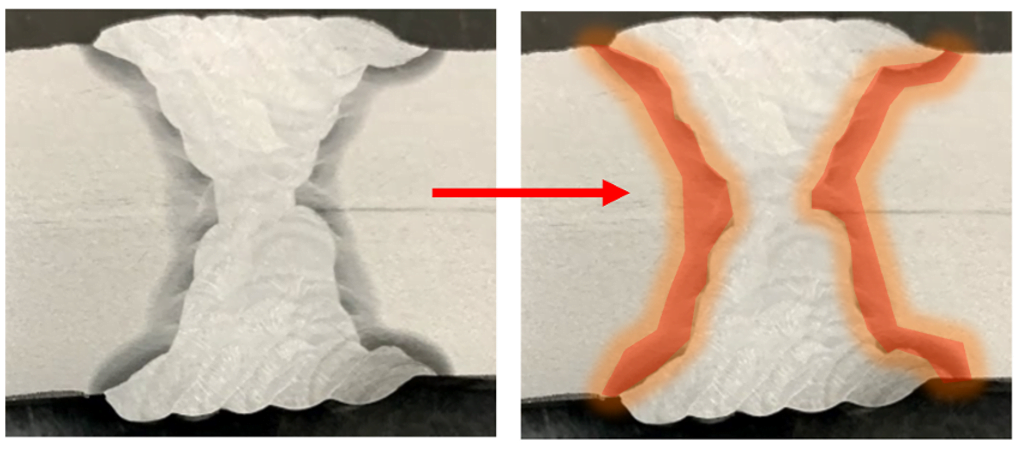
The Heat Affected Zone (HAZ) is the region of a material that undergoes significant changes in microstructure and mechanical properties because of the heat generated during welding, heat treatment or even cutting. When heat is applied to a material, as during welding, a localised area is exposed to high temperatures, producing thermal gradients and consequent changes in the structure of the material. The HAZ lies between the fused weld bead and the base metal, as shown below:
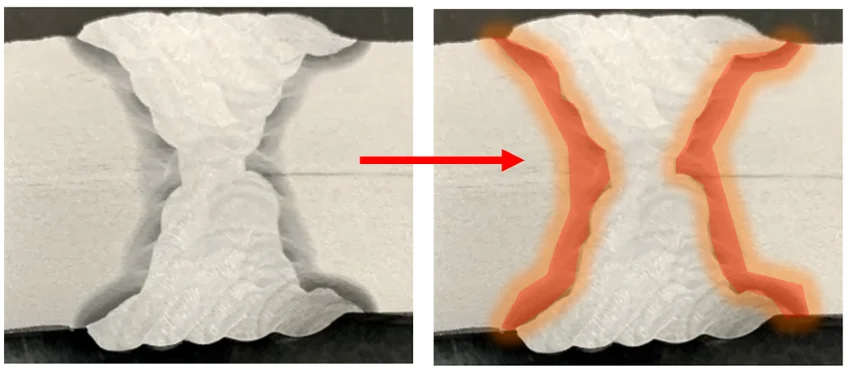
Understanding the HAZ is crucial in welding and heat treatment for several reasons:
- Weld integrity: the HAZ plays a critical role in determining the overall strength and integrity of a welded joint. It acts as a transition zone between the base material and the weld metal, and any change in its microstructure and properties can affect the performance and durability of the welded structure.
- Mechanical properties: the HAZ often exhibits different mechanical properties from the base material because of the thermal cycles occurring during welding or heat treatment. Those changes can include variations in hardness, toughness, ductility and residual stress. Controlling the size and intensity of the HAZ is necessary so the resulting material meets the required specifications and performs as designed.
- Weldability: the HAZ can present weldability challenges. It is prone to problems such as cracking, reduced strength and distortion, which can affect the quality and reliability of the welded joint. Understanding the HAZ helps in selecting the right welding processes, parameters and filler materials to minimise those challenges.
- Heat treatment effects: in heat treatment processes such as annealing, quenching or tempering, the HAZ goes through thermal cycles that can affect the microstructure and properties of the material. Knowledge of the HAZ is essential to controlling and optimising heat treatment and achieving the desired material characteristics.
Formation and characteristics of the HAZ
Heat input during welding and its effects on the base material.
During welding, a significant amount of heat is applied to the base material in the vicinity of the joint. The figure below plots temperature during TIG welding of a plate. Some regions go from 2000 K (1726 °C) to 800 K (526 °C) in a very short time.
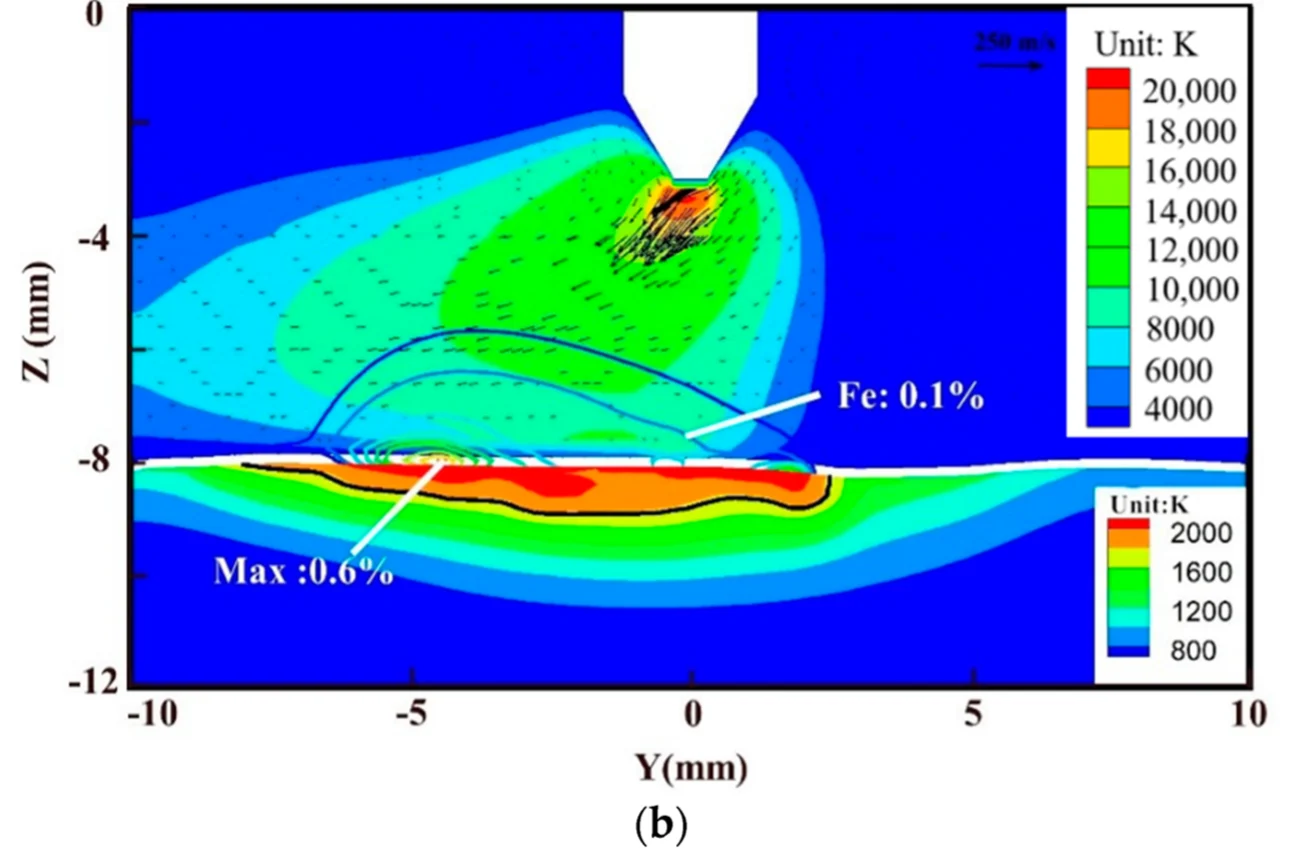
Heat input may come from an arc, a laser beam or a flame, depending on the welding process. Its intensity and duration depend on the process and the parameters used. Heat is needed to melt and solidify the consumable and the base metal to make the joint, but it also drives the base material to high temperatures and rapid cooling rates, producing several thermal effects:
- Thermal gradient: heat input creates a thermal gradient within the material, with the highest temperatures next to the weld pool, falling gradually towards the base material. The gradient produces a rapid cooling rate in the region adjacent to the weld pool, forming the HAZ and driving microstructural changes there.
- Phase transformations: the elevated temperatures in the HAZ can cause phase transformations in the base material. In carbon steels, for example, the HAZ can induce the formation of austenite (which only forms at high temperatures, above 712 °C, in these steels); rapid cooling then transforms austenite into martensite, while at greater distances, where cooling rates are lower, bainite or ferrite may form. All those transformations can occur at different cooling rates within a single thermal cycle.
The different heat affected regions of a joint and their microstructural changes
Different transformations occur in each type of material, but for carbon steels the different regions of the HAZ are shown below:
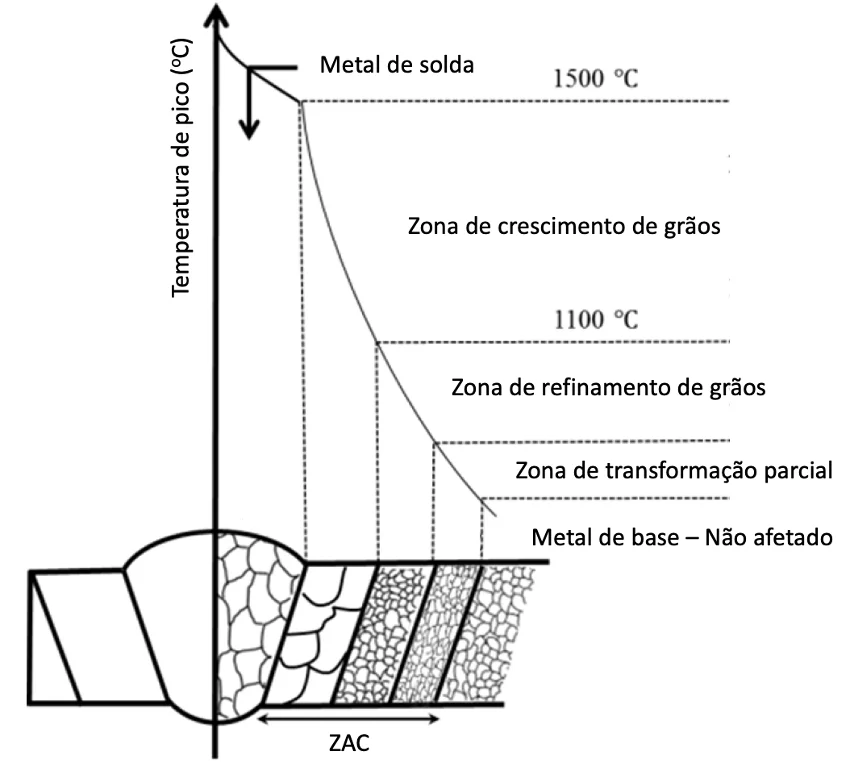
Weld metal: the solidified metal resulting from the welding process.
Grain growth zone: the zone where rapid austenitic grain growth occurs because of exposure to temperatures close to the melting point. The larger the austenite grain, the more readily it transforms into martensite, meaning higher hardness can develop in that region.
Grain refinement zone: a region exposed to temperatures high enough to transform to austenite, but not high enough for those grains to grow, which reduces the chance of martensite forming and therefore of hardness change.
Partial transformation zone: the zone where temperature reached levels that transformed only part of the microstructure into fine austenite, with the rest remaining as tempered ferrite.
Base metal: the temperature was not sufficient to change the base metal.
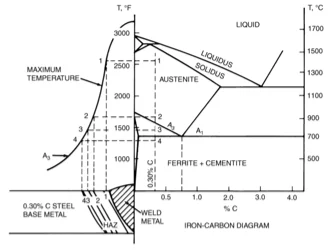
All these transformations should be checked against the phase diagram of the alloy being worked on, to predict what can happen in the material. The example used in this article is carbon steel, so we look at the Fe-C diagram below:
Properties of the HAZ
Because each region of the HAZ has a different microstructure, each also has different physical and mechanical properties compared with the base material:
Hardness variation: the HAZ often shows a hardness gradient, with the highest hardness adjacent to the fusion zone and falling gradually towards the base material. That variation is mainly attributable to microstructural changes and the formation of different phases.
Strength and toughness: the HAZ can have reduced strength and toughness compared with the base material, especially if it experiences rapid cooling rates. This can be attributed to factors such as grain growth, altered microstructure and the presence of potentially brittle phases.
Residual stress: thermal cycles and non-uniform cooling in the HAZ can develop residual stresses, with implications for dimensional stability, distortion and susceptibility to cracking.
Embrittlement: the HAZ can become brittle (losing ductility or impact resistance) depending on alloy composition, heat input and cooling rate, which can lead to the formation of phases that embrittle the material.
Corrosion resistance: microstructural changes can also form unwanted phases such as sigma phase and other precipitates in stainless and duplex steels, compromising the corrosion resistance of the alloy.
Factors affecting the size and properties of the HAZ
Heat input, as seen above, is responsible for the changes in the HAZ, and that energy is quantified by multiplying welding current by voltage and dividing by travel speed. So:
- The higher the welding current, the higher the heat input.
- The higher the welding voltage, the higher the heat input.
- The higher the travel speed, the lower the heat input.
Knowing that, we can set welding parameters to control the size of the HAZ: the higher the heat input, the larger the HAZ, because of steeper thermal gradients and longer exposure to elevated temperatures.
Understanding the effects of heat input and of the HAZ transformations, we can see that for carbon steels:
- High heat input: larger HAZ, lower hardness, and impact resistance may be compromised.
- Low heat input: smaller HAZ, higher hardness and better impact resistance. Lack of fusion can occur during welding because of the low welding energy.
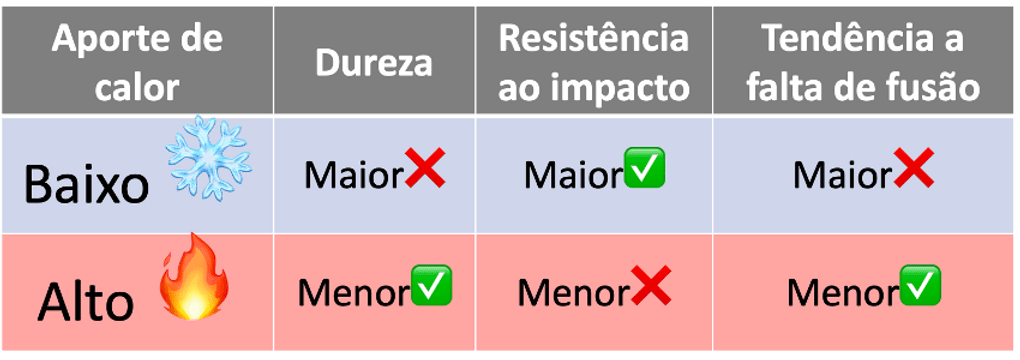
So we need to work within a heat input band appropriate to the material, neither too low nor too high, to secure the quality of the welded joint.
Strategies to minimise HAZ-related problems
- Optimised welding parameters: selecting appropriate welding parameters, such as heat input (suitable voltage, current and travel speed), helps control the size and the thermal effects in the HAZ. That means striking a balance between ensuring sufficient fusion and minimising the extent of the thermal gradients and their associated microstructural changes.
- Understanding the material to be welded, so as to know what changes can occur during welding.
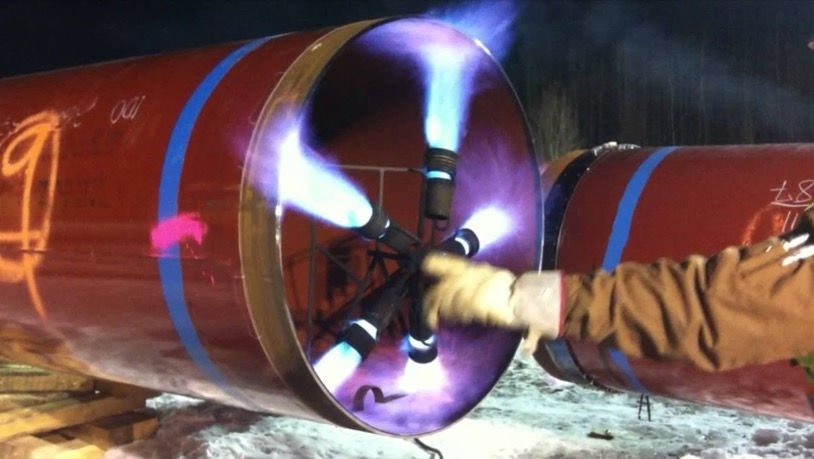
- Preheat and post-heat: applying preheat and/or post-heat helps mitigate residual stress, reduces susceptibility to cold (hydrogen) cracking and lowers the cooling rate of the HAZ, reducing hardness in that region.
Post-weld heat treatment (PWHT): post-weld heat treatments such as stress relief, annealing or tempering can relieve residual stresses and improve the microstructure and mechanical properties of the HAZ.